How to Winterize an Outdoor Kitchen in Twin Falls, Idaho
Twin Falls County rates concrete weathering here as Severe, and the thaw does more harm than the freeze. The fall shutdown that protects the water lines, the masonry, the joints and the appliances.
TL;DR
- The enemy is the cycle, not the cold. Water gets into a joint, freezes, expands, and widens it. Then it thaws and does it again. Twin Falls County rates concrete weathering probability here as Severe.
- Water first. Shut off at the valve inside the heated house, drain the line, open the outdoor faucet, and blow the line out with compressed air the same way you do irrigation.
- Don't forget the trap. Standing water in a drain trap freezes too.
- Unplug the refrigerator and leave the door ajar, so it doesn't grow mold over the winter.
- Shut off the gas and look over the connections while you're there.
- Seal the joints before it freezes, not after. Countertop seams, mortar joints, and the gap where posts meet concrete are the usual entry points.
- Use breathable covers, not plastic tarps. Trapped moisture is its own problem.
- Go easy on de-icing chemicals near masonry, and use a plastic shovel.
- If winterizing is hard, the system was designed wrong. A good install makes this a 30-minute job.
Most people think of winter damage as something cold does. It isn't, really. A kitchen that froze solid in November and stayed frozen until March would come through fine.
The damage comes from the cycle. Water finds its way into a hairline crack in the countertop, a gap in the mortar, or a length of pipe nobody drained. It freezes overnight and expands. The afternoon sun comes out, it thaws, the crack is now slightly bigger, and more water gets in. Repeat that through a Magic Valley winter and a hairline crack becomes a real one.
This is not a theoretical concern here. Twin Falls County's published building design criteria rate the weathering probability for concrete as Severe, and set the design temperature at zero degrees Fahrenheit. Inside city limits, the winter heating design temperature is two degrees and the climate zone is 5B. Frost depth in both jurisdictions is 24 inches.
High desert does this to things. Big daily temperature swings, bright sun on a cold day, and repeated freeze and thaw. Here is the shutdown that prevents most of it.
Water: the one that actually bursts things
Everything else on this list is maintenance. This one is damage prevention.
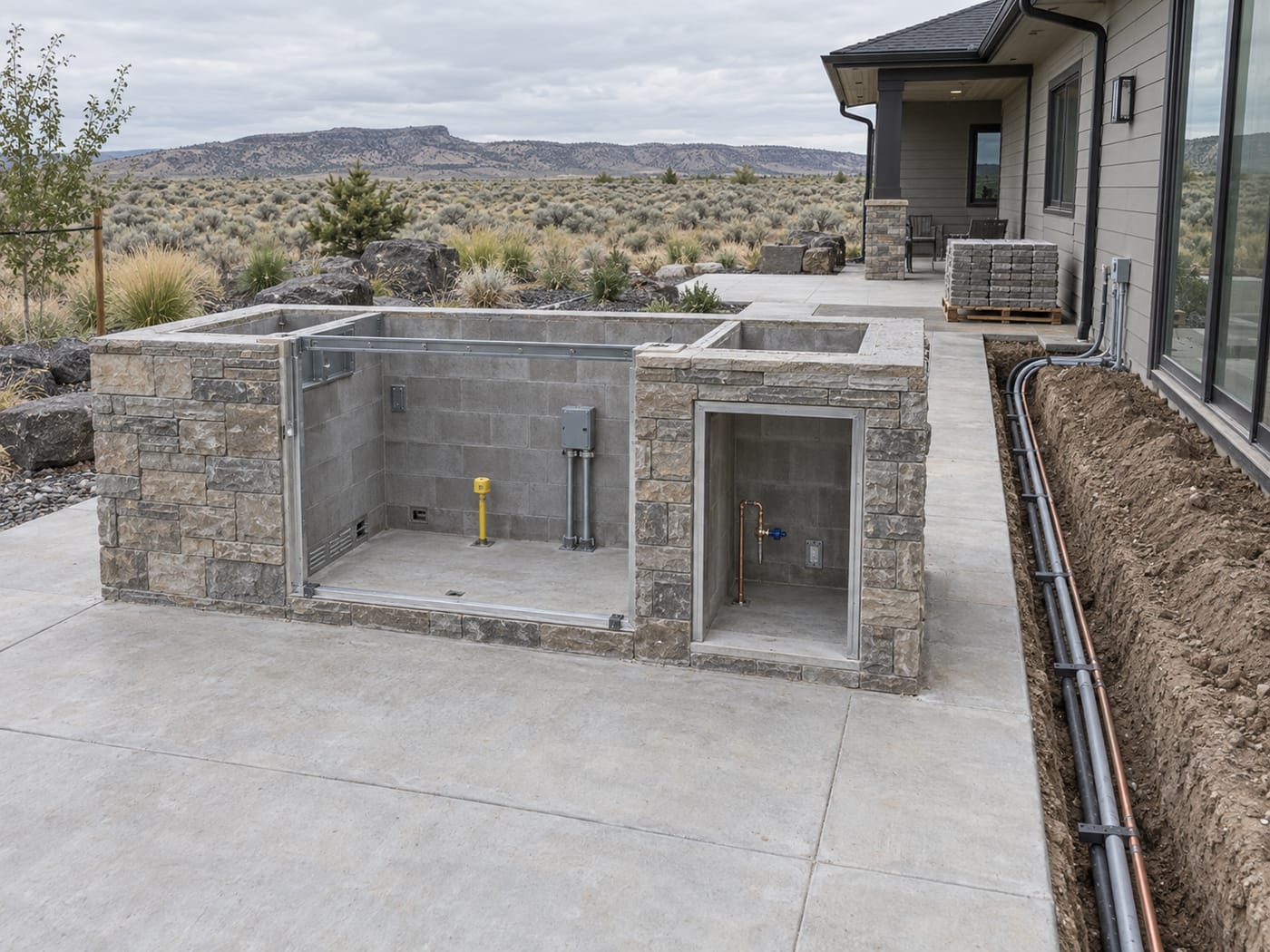
Shut off at the right valve. On a properly designed system, the shutoff for the outdoor kitchen lives inside the heated part of the house, with a drain on the kitchen side of that valve, also indoors. Close the valve. If yours is outside in an unheated spot, that's worth fixing before next winter.
Drain the line. Open the drain on the kitchen side of the valve and let the line empty.
Open the outdoor faucet. This lets air in behind the water so the line actually clears rather than holding a column of it.
Blow it out. Compressed air pushes out what gravity leaves behind. If you already have your irrigation blown out every fall, this is the same job and the same equipment, and it is worth asking whoever does your sprinklers to do the kitchen line at the same visit.
Deal with the trap. The drain trap under the sink is designed to hold water. That is its entire function, and in January that water freezes. Clear it, or add RV-type antifreeze, which is formulated for potable systems.
Frost-proof fixtures help but don't excuse the rest. A frost-proof faucet keeps its actual shutoff valve back inside warm space so the exposed part holds no standing water. Good feature. It does not drain the rest of your supply line for you.
Gas
Shut off the gas supply to the kitchen at the appliance valves.
While you are down there with a flashlight, look over the connections for wear, corrosion or anything that moved. Fall is a reasonable time to catch something small, and it costs you two minutes you are already spending.
If anything looks off, that is a licensed plumber or gas fitter call rather than a homeowner repair. Gas work is permitted work in both the city and the county, which we cover in our guide to running gas, water and power to an outdoor kitchen.
Electrical and appliances
The refrigerator is the one people get wrong. Empty it, clean it, unplug it, and leave the door propped slightly open. A sealed, unpowered refrigerator sitting through a wet winter grows mold, and you will discover that in April. Propping the door is the whole fix.
It is also worth checking your unit's documentation for a minimum ambient operating temperature. Some outdoor refrigerators are not rated to run below a certain outside temperature, and running one in deep cold can cause the compressor to cycle improperly. If yours has a limit, shutting it down for the season is the right call anyway.
The grill. Give it a real clean rather than a quick scrape. Burner ports in particular, since grease left in them over winter hardens and causes uneven lighting in spring. Clean grates, empty the grease tray.
Ice makers and anything else with a water line get the same treatment as the sink: drain it, and clear any standing water.
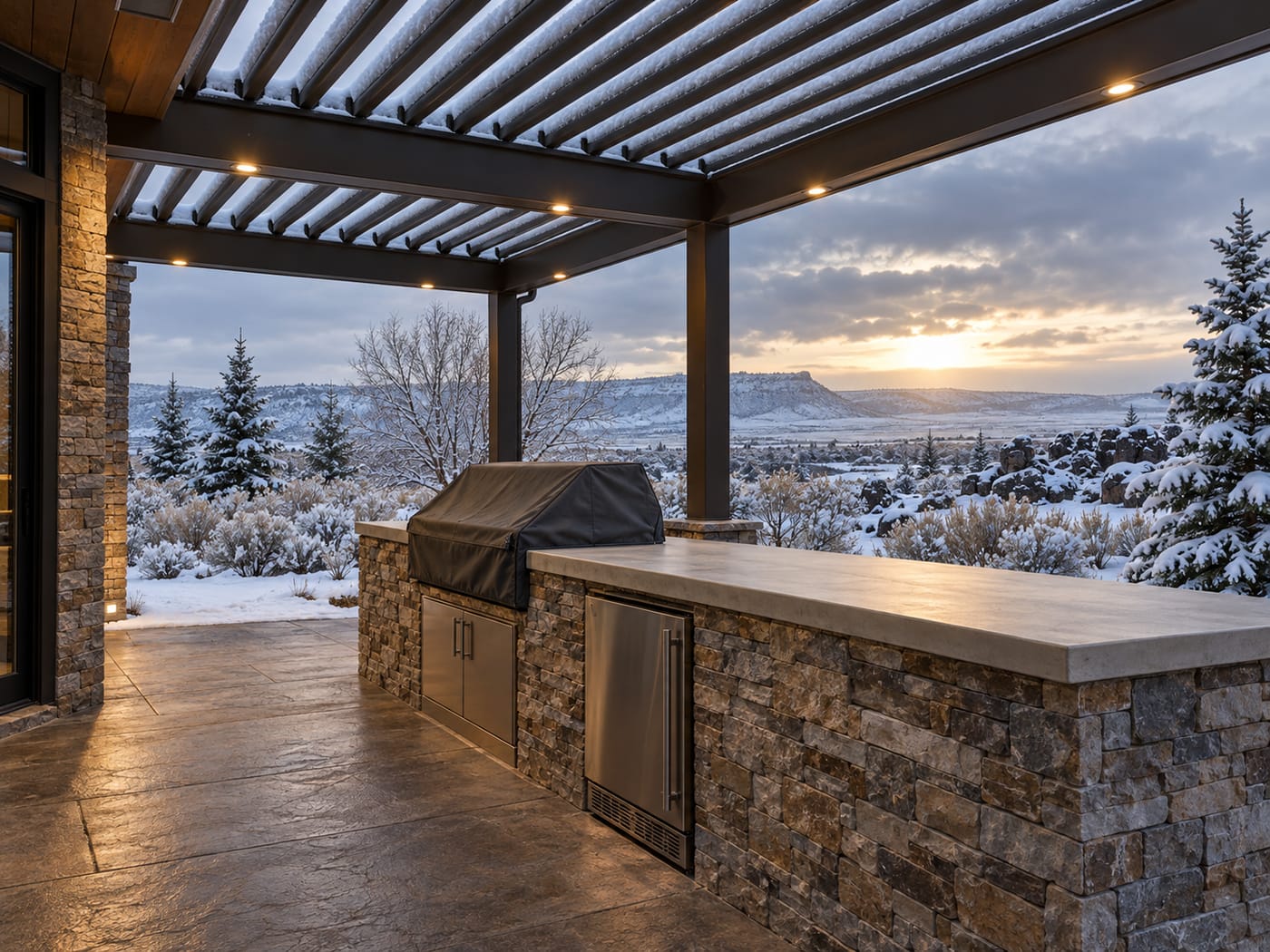
Covers matter, and the type matters more. Use breathable, waterproof covers made for the equipment. A plastic tarp sheds rain and then traps every bit of moisture underneath it against your stainless steel, which is how you get corrosion on something that was supposed to be protected.
Masonry, countertops and joints
This is the freeze-thaw section, and it is the one most people skip.
Inspect before you seal. Walk the kitchen with a flashlight and run your hand along the surfaces. Gaps are often easier to feel than to see. You are looking for:
- Gaps in countertop joints where two slabs meet
- Hairline cracks in stone, brick or concrete
- Deteriorating mortar joints
- Open seams where a pergola post meets its concrete footing
- Shifting pavers or cracks in the patio slab
Then seal. Granite, concrete and natural stone countertops benefit from annual sealing, and joints need a flexible sealant rather than a rigid one, because the material is going to expand and contract all winter. A sealant that cannot move with it will fail at exactly the moment you needed it.
The gap where posts meet concrete is the one people forget, and it matters because water sitting in that seam is working on both the post base and the footing.
Do this before the first hard freeze, not after. Sealing a joint that already has water in it traps the water inside, which is worse than leaving it open.
Using the space in winter without damaging it
A covered outdoor kitchen is not a summer-only object, and a fire feature or heaters can make it genuinely usable in shoulder season. Two cautions if you do.
Go easy on de-icing chemicals near masonry and concrete. They accelerate surface damage on exactly the materials you are trying to protect. Sand gives you traction without the chemistry.
Use a plastic shovel, not metal, on the patio surface and never on the countertops.
If your kitchen sits under a louvered roof, note that the roof has its own winter behavior and it is often the opposite of what people assume. We cover that in our guide to patio cover snow load in Twin Falls.
The part that is really a design question
Here is what we have learned from doing this: a system that is hard to winterize gets winterized badly.
If the shutoff is in an awkward spot, if there is no drain on the line, if the trap cannot be reached without taking a cabinet apart, then every fall somebody does a partial job in the cold and tells themselves it is probably fine. That is how a line splits.
A well-designed outdoor kitchen makes the fall shutdown a short, obvious sequence. The valve is where you can reach it, the drain is right there, and whoever installed it walked you through the shutdown and the spring startup in person rather than handing you a sheet.
If you are planning a kitchen now, ask the builder to show you how it will be winterized before it is built. If you have one already and the answer is unclear, that is worth sorting out this month rather than next.
When to do it
Before the first hard freeze, which in the Magic Valley means watching the forecast in October rather than picking a date on the calendar. The water side is the time-sensitive part. A single hard overnight freeze on an undrained line is all it takes.
Sealing wants to happen earlier still, since most sealants need temperatures above a minimum to cure properly, and you want the joints closed before the wet season rather than during it.
Not sure your kitchen was built to be winterized?
If the shutoff is in a strange place, or nobody ever showed you the sequence, a consultation will tell you what you are working with and what can be improved. We design outdoor kitchens here to be shut down easily, because a system that is simple to winterize is the one that actually gets winterized.
Book a Free Design Consultation or call (208) 731-1729
Frequently asked questions
When should I winterize my outdoor kitchen in Twin Falls? Before the first hard freeze, which means paying attention to the October forecast rather than waiting for a set date. The water lines are the urgent part, since a single hard overnight freeze on an undrained line can split it. Sealing should happen earlier, while temperatures are still warm enough for the product to cure.
Do I really need to drain the water lines? Yes. Water expands when it freezes, and a line that still holds water can split. Shut off at the indoor valve, drain the line, open the outdoor faucet, and blow it out with compressed air. If you have irrigation blown out each fall, have the kitchen line done at the same time.
Should I leave my outdoor refrigerator running all winter? Usually not. Empty it, clean it, unplug it, and prop the door slightly open so it does not grow mold. Check your unit's documentation too, since some outdoor refrigerators specify a minimum ambient operating temperature and are not designed to run in deep cold.
Can I leave the grill outside over winter? Yes, if it is built in and properly covered. Clean it thoroughly first, especially the burner ports, and use a breathable waterproof cover rather than a plastic tarp. Plastic traps moisture against stainless steel, which causes the corrosion the cover was meant to prevent.
What does freeze-thaw actually do to stone and concrete? Water works into joints, hairline cracks and mortar, then freezes and expands, widening the gap. When it thaws, more water gets in and the cycle repeats. Over a season that turns small flaws into real cracks. Twin Falls County rates the weathering probability for concrete here as Severe, which is the official way of saying this climate is hard on masonry.
Do I need to seal my countertops every year? Granite, concrete and natural stone generally benefit from annual sealing, and an outdoor installation in a freeze-thaw climate is a stronger case than an indoor one. Seal before the wet season, not during, and use a flexible sealant on joints so it can move with the material.
Is it safe to use ice melt on my patio? Use it sparingly near masonry and concrete, since de-icing chemicals accelerate surface damage. Sand provides traction without the chemistry. Use a plastic shovel rather than metal, and keep both off the countertops.
What if I want to use the kitchen in winter? That is a reasonable goal, and a cover, screens and a heat source make it realistic in shoulder season. The water side is the limiting factor. Some homeowners keep the kitchen usable and simply accept that the sink is out of service from late fall to spring, which is a sensible compromise.
This article is general guidance for the Twin Falls area. Follow your appliance manufacturers' instructions for winter storage and operating temperature limits, and consult a licensed plumber or gas fitter for anything involving the gas or water system itself.